
1. Introduction: The Emergence of Robotic Traffic Management in Shanghai
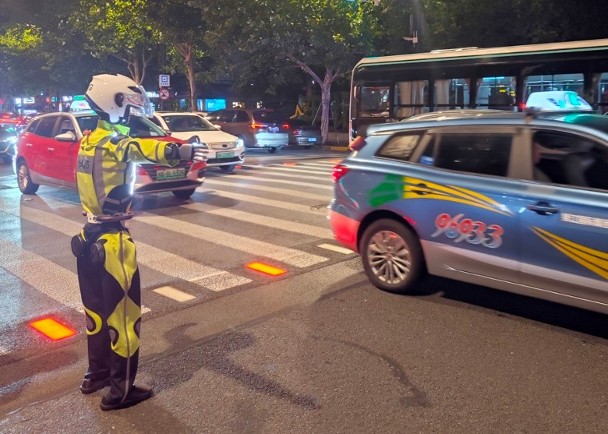
2. The Role of Human Traffic Officers: Responsibilities and Relevance

Human traffic officers are more than rule enforcers. They are frontline responders during road accidents, large public events, and emergencies. With their situational awareness, empathy, and real-time judgment, human officers bring a level of adaptability that machines struggle to match. Whether managing unexpected roadblocks, resolving driver disputes, or helping pedestrians cross safely, their human touch plays a critical role in ensuring smooth traffic flow and community safety.
3. RoboCop in Shanghai: A Glimpse Into AI-Powered Traffic Control
The RoboCop currently deployed in Shanghai is equipped with sensors, cameras, and AI software to identify traffic patterns, recognize violations, and interact with drivers using digital signals. Its precision and fatigue-free operation have impressed both locals and international observers. This robot works as part of a broader smart traffic system, complementing existing traffic lights and human officers. It represents a bold step toward automated urban mobility systems that aim to reduce human error, boost efficiency, and support real-time decision-making.
4. Benefits of Robotic Traffic Management: Efficiency and Safety
The advantages of RoboCop-like systems include:
👉24/7 Operation: Unlike humans, robots don’t need breaks, ensuring constant oversight.
👉Data Accuracy: Advanced sensors can track vehicle flow, recognize license plates, and monitor speed with high precision.
👉Reduced Congestion: Real-time analysis helps optimize traffic signals and suggest alternate routes.
👉Safety Enforcement: Robots can automatically detect violations and issue warnings without confrontation.
👉Pandemic/Disaster Use: In high-risk situations, robots can reduce the need for human exposure.
These improvements, combined with AI learning capabilities, position robotic traffic control as a promising upgrade to traditional methods.
5. Challenging the Status Quo: Are Human Traffic Cops Becoming Obsolete?
While RoboCops can enhance urban traffic systems, it is premature to declare the obsolescence of human traffic officers. Robots lack emotional intelligence, flexibility, and the ability to de-escalate tense situations—a critical skill in crowded or chaotic conditions. Instead of replacing human officers, RoboCops may serve as supportive tools that allow law enforcement to focus on higher-level tasks such as accident investigation, crowd control, and emergency response. The future may favor hybrid traffic enforcement models where humans and machines collaborate effectively.
6. Ethics and Public Sentiment: Reactions to RoboCop Deployment
The RoboCop’s rise raises ethical and social concerns:
👉Job Displacement: Will robots take over roles traditionally filled by humans?
👉Privacy: Constant surveillance via AI raises concerns about data use and civil liberties.
👉Trust: How will citizens respond to being directed by a machine?
Public sentiment in Shanghai appears curious and cautiously optimistic. Many view RoboCop as a technological marvel, while others raise valid concerns about human connection and job security. To gain broad acceptance, transparent governance and community engagement will be key.


0 Comments